


Summary
This week highlights significant developments in health-tech funding, including Isomorphic Labs' $5 billion Series C round and Knit Health's $35 million Series A. The US HIPAA Privacy Rule has been overhauled, and emerging cybersecurity concerns arise amid multiple healthcare data breaches. Guidance from the EDPB on data transfer instruments is also discussed.
1. AI Investment and Health-AI Governance
Isomorphic Labs Closes $5 Billion Series C at a $50 Billion Valuation
Isomorphic Labs, the London-based techbio company founded by Google DeepMind chief executive Demis Hassabis and focused on AI-driven drug discovery, confirmed on 17 November 2026 a $5 billion Series C financing round co-led by Greenoaks and Sequoia Capital at an approximate $50 billion valuation. The round more than doubles the $2.1 billion Series B closed in May 2026 and is reported as the largest venture financing ever raised by a biotech or techbio company. For data-protection practitioners in life sciences, a company operating at this scale and working with molecular and potentially patient-derived data will face heightened scrutiny under GDPR Article 9 (special-category data) and the EU Clinical Trials Regulation 536/2014 (the regulation governing the authorisation and conduct of clinical trials in the European Union). Sponsors and contract research organisations engaging Isomorphic Labs as a data processor or sub-processor should ensure that data processing agreements reflect the full scope of AI-model training activities.
Knit Health Raises $35 Million to Train a Healthcare World Model on 130 Million Patient Records
Knit Health, a University of California, Berkeley spin-out, announced a $35 million Series A on 16 November 2026 to expand deployment of its Med-BEAM model, described as trained on billions of healthcare decisions drawn from records of hundreds of millions of patients. The scale of the training dataset raises immediate questions about the lawful basis for processing, purpose limitation and data minimisation under GDPR Articles 5 and 6, as well as HIPAA de-identification standards for any US-sourced records. Organisations considering integration of such models into clinical or research workflows should conduct a data protection impact assessment (DPIA) in line with GDPR Article 35 before deployment.
Akara Raises $5.5 Million for Privacy-Preserving Edge AI in Hospitals
Akara, a Trinity College Dublin spin-out with offices in Ireland, Los Angeles and the United Kingdom, announced on 11 November 2026 a $5.5 million funding round led by Locke Health, bringing its total funding to $12.3 million. Its product pairs a wall-mounted thermal sensor with on-device AI to monitor patients without transmitting identifiable images off-site. The edge-processing architecture directly addresses the data-minimisation principle under GDPR Article 5(1)(c) and reduces the volume of special-category health data crossing network boundaries, making it a practical illustration of privacy-by-design as required by GDPR Article 25.
OpenAI Expands Healthcare Workflows; Monument Health Restricts AI Tool Over Patient Data Concerns
OpenAI announced on 16 November 2026 expanded computer-use agent capabilities targeting healthcare administration workflows. In a related development, Monument Health's Chief Information Officer restricted clinician access to OpenEvidence, an AI platform that synthesises medical evidence, after a physician used it to inform clinical decisions drawing on data from more than 100 patient records, as reported by STAT News and ICT&health. The incident illustrates a critical compliance gap: a vendor's executed HIPAA Business Associate Agreement (BAA) does not automatically cover uses of patient data that fall outside the agreed scope, particularly where individual clinicians act without explicit authorisation. Healthcare organisations should audit shadow AI use and update acceptable-use policies to specify permitted data inputs.
Hamburg DPA Publishes AI Chatbot Case Study Applying EDPB Opinion 28/2024
The Hamburg Commissioner for Data Protection and Freedom of Information (HmbBfDI) published on 5 November 2026 a case study explaining how to apply EDPB Opinion 28/2024 (the European Data Protection Board's opinion on AI models and GDPR compliance) to a live deployment. The subject is LLMoin, the Hamburg public administration's chatbot built as a wrapper around an OpenAI GPT model running on Microsoft Azure. The authority reviewed the system, approved it and now uses it internally for handling complaints. The case study is valuable for any organisation deploying large-language-model wrappers involving third-party API calls, as it confirms that a data controller must map every processing operation including prompt data, context windows and model outputs against GDPR Articles 13 and 14 disclosure obligations.
AMA and FSMB Issue Joint Report on AI Accountability in Medicine
The American Medical Association (AMA) and the Federation of State Medical Boards (FSMB) jointly released on 12 November 2026 a proceedings report entitled "AI and the Practice of Medicine: Examining Accountability and Responsibility in the AI Era," summarising a forum held on 14 September 2026. The report convened state medical board representatives, physicians, patient advocates, health systems, technology developers, regulators and legal experts to address accountability gaps when AI tools contribute to clinical decisions. For health-AI vendors selling into the European Union, the accountability discussion mirrors the requirements of Article 9 of the EU AI Act (Regulation (EU) 2024/1689, the regulation establishing harmonised rules on artificial intelligence) which mandates a risk-management system for high-risk AI systems, including those in the Annex III healthcare category.
2. Regulatory Developments: HIPAA, the EU AI Act FRIA and the Cyber Resilience Act
HHS Publishes Final Rule Modernising the HIPAA Privacy Rule
The United States Department of Health and Human Services Office for Civil Rights (HHS OCR) announced on 16 November 2026 a final rule amending the HIPAA Privacy Rule (RIN 0945-AA00), adopting the majority of proposals from the 2021 Notice of Proposed Rulemaking. The most operationally significant change reduces the maximum response time for individual right-of-access requests from 30 calendar days to 15 calendar days, with a single permissible extension of up to 30 days. The rule also allows individuals to receive electronic protected health information (ePHI) directly through personal health applications and revises permissible fees, including free copies in certain circumstances. Covered entities and their business associates conducting clinical research under HIPAA authorisations should update their subject-access procedures and review any vendor agreements that specify response timelines, as failure to meet the new 15-day threshold will constitute a Privacy Rule violation.
European Commission Publishes Guidance on the Cyber Resilience Act
The European Commission adopted on 27 July 2026 a Communication (C(2026) 5252) providing guidance on the application of Regulation (EU) 2024/2847, the Cyber Resilience Act (CRA), which establishes cybersecurity requirements for products with digital elements placed on the EU market. The guidance was published in the Official Journal on 17 November 2026 under reference C/2026/6013. It is non-binding: only the Court of Justice of the European Union interprets the CRA authoritatively, and only harmonised standards confer a presumption of conformity. Manufacturers of connected medical devices, clinical trial platforms and health-data management systems should note that the CRA interacts with the GDPR's Article 32 obligation to implement appropriate technical and organisational security measures, and that CE marking processes for Class IIb and III medical devices may now need to address CRA conformity assessments in parallel.
Commission Publishes Draft FRIA Template Under the EU AI Act
The European Commission's AI Office published on 16 November 2026 a draft template to assist certain deployers of high-risk AI systems listed in Annex III of the EU AI Act in conducting the fundamental rights impact assessment (FRIA) required by Article 27 of that Act. The template was developed with input from the EU Agency for Fundamental Rights (FRA) and follows the structure of Article 27(1) using guiding questions. Deployers of AI-based clinical decision support, patient triage or remote monitoring tools that fall within Annex III should treat the consultation period as an opportunity to align their FRIA methodology with the template before it is finalised, particularly where the AI system also processes sensitive health data triggering a parallel DPIA under GDPR Article 35.
EDPB Supports Alternative Contractual Clauses for Onward International Data Transfers
The European Data Protection Board adopted a statement on 13 November 2026 supporting the use of contractual clauses developed by the Council of Europe and the Ibero-American Data Protection Network as alternative instruments for transferring personal data internationally. This follows updates to the European Commission's FAQs on EU Standard Contractual Clauses (SCCs), which are the contractual safeguards under GDPR Article 46(2)(c) most commonly used to legitimise personal data transfers to third countries. For sponsors and contract research organisations managing data flows between EU clinical trial sites and non-EU laboratories or data repositories, the EDPB statement expands the toolkit of compliant transfer mechanisms, which may be relevant where counterparties in Latin America or Council of Europe member states outside the EU are involved.
3. Healthcare Data Breaches: A Persistent Operational Risk
Five separate healthcare data breach disclosures were reported this week, collectively affecting several hundred thousand individuals across the United States.
Premise Health confirmed that a former employee copied patient data without authorisation from 26 March 2026, discovered on 18 September 2026, with the affected count growing from an initial 68,000 to more than 416,700 individuals. UCHealth (Aurora, Colorado) notified approximately 129,000 individuals after an unauthorised third party compromised two employee accounts within its Microsoft cloud environment, discovered on 27 July 2026. Geisinger (Danville, Pennsylvania) disclosed that an unauthorised party accessed one employee email account, discovered on 20 August 2026, exposing data for fewer than 2,000 patients including medical record numbers, dates of birth and health insurance carrier names. Kern Medical (Bakersfield, California) reported that an unauthorised third party accessed a patient database discovered around 17 September 2026, with Social Security numbers among the compromised fields for a subset of individuals. Telecare Corporation and Enara Health each disclosed separate incidents in reports collated by the HIPAA Journal.
The pattern across these incidents, insider threat, cloud account compromise and database exfiltration, corresponds precisely to the attack vectors the CNIL cited in its 9 November 2026 enforcement action against ten French local authorities and one public body under GDPR Article 32, which found inadequate multi-factor authentication for administrator accounts and insufficiently controlled third-party access. Healthcare organisations in both jurisdictions should treat the two enforcement and disclosure streams as complementary evidence for strengthening access controls.
(Read more) | https://www.globenewswire.com/news-release/2026/11/13/3402924/0/en/uchealth-notifies-individuals-of-data-security-incident.html | https://www.thetimes-tribune.com/2026/11/16/geisinger-email-data-breach-affects-information-of-nearly-2000-patients/ | https://www.kget.com/news/local-news/kern-medical-database-with-personal-information-breached-by-unauthorized-third-party/ | https://www.cnil.fr/fr/sanctions-cybersecurite-collectivites-territoriales
4. Medical Device Cybersecurity and Sterilisation Standards
AI-Enabled Medical Devices as a Cybersecurity Attack Surface
A Forbes Technology Council commentary published on 13 November 2026 by vCISO Dan Sorensen draws on Claroty's 2025 research covering 2.5 million IoMT (Internet of Medical Things) devices across 351 organisations, finding that 89 percent included internet-exposed devices carrying known vulnerabilities and that 99 percent had at least some known-exploited vulnerabilities. The FDA's cybersecurity guidance for medical devices now requires manufacturers to submit a software bill of materials (SBOM) with pre-market applications, but networked AI devices in clinical settings create post-market update dependencies that existing hospital procurement frameworks do not reliably address. The EU Cyber Resilience Act, noted above, will impose ongoing vulnerability-handling obligations that mirror these concerns for products placed on the European market.
World Triathlon Breach Exposes Athletes' Medical Data via Critical BI Tool Flaw
World Triathlon notified national federations on 13 and 14 November 2026 that an unauthorised party exploited a critical unauthenticated SQL-injection vulnerability (CVE-2026-72898, CVSS score 10.0) in the password-reset endpoint of Metabase, a third-party business-intelligence and reporting tool, copying complete database tables between 6 and 8 November 2026. The compromised data included athletes' medical information. The incident is a reminder that GDPR Article 28 requires controllers to verify that data processors, including analytics and reporting vendors, maintain adequate security under Article 32, and that vulnerability disclosures in third-party tools must trigger prompt review of any deployment within health or sports-medicine data environments.
New EU Harmonised Standard for Radiation Sterilisation of Healthcare Products
Commission Implementing Decision (EU) 2026/2481 updates the list of harmonised standards supporting compliance with the EU In Vitro Diagnostic Regulation (IVDR) by publishing the reference of the revised standard EN ISO 11137-1:2026, which covers requirements for the development, validation and routine control of radiation sterilisation processes for healthcare products. Manufacturers of sterile single-use devices used in clinical trials, including sampling kits and infusion sets, should verify that their existing validation documentation aligns with the revised standard to maintain IVDR conformity.
Stay Compliant with iliomad
If this week's developments raise questions about your organisation's DPIA obligations for AI-enabled tools, your HIPAA Business Associate Agreement provisions, your data transfer strategy following the EDPB's new statement on alternative clauses, or your readiness for the Cyber Resilience Act, the iliomad team is available to assist. Contact us to discuss a tailored compliance review for your clinical or health-tech programme.
FAQs
Our frequently questions
The wave of US healthcare data breaches disclosed this week — affecting organisations including Premise Health (416,700+ individuals), UCHealth (129,000 individuals), Geisinger, Kern Medical, Telecare Corporation and Enara Health — reveals three recurring attack vectors: insider threat (unauthorised copying by employees), cloud account compromise (credential attacks on Microsoft cloud environments), and database exfiltration by unauthorised third parties. These mirror the vulnerabilities cited by France's CNIL in its 9 November 2026 enforcement action under GDPR Article 32, which found inadequate multi-factor authentication for administrator accounts and insufficiently controlled third-party access. Healthcare organisations should strengthen access controls by implementing MFA for all administrator and privileged accounts, enforcing least-privilege access for third parties, monitoring for anomalous data-copying behaviour, and conducting regular audits of cloud environment permissions.
The EU Cyber Resilience Act (CRA), Regulation (EU) 2024/2847, establishes cybersecurity requirements for products with digital elements placed on the EU market. European Commission guidance published on 17 November 2026 (C/2026/6013) clarifies its application, though it is non-binding. For manufacturers of connected medical devices, clinical trial platforms and health-data management systems, the CRA interacts directly with GDPR Article 32's obligation to implement appropriate technical and organisational security measures. CE marking processes for Class IIb and III medical devices may now need to address CRA conformity assessments in parallel. The CRA also imposes ongoing post-market vulnerability-handling obligations, which is particularly important given research showing that 89% of IoMT devices carry internet-exposed known vulnerabilities.
The European Data Protection Board (EDPB) adopted a statement on 13 November 2026 supporting the use of contractual clauses developed by the Council of Europe and the Ibero-American Data Protection Network as alternative instruments for international personal data transfers, complementing the European Commission's Standard Contractual Clauses (SCCs) under GDPR Article 46(2)(c). For sponsors and contract research organisations managing data flows between EU clinical trial sites and non-EU laboratories or data repositories, this expands the toolkit of compliant transfer mechanisms. This is particularly relevant where counterparties are located in Latin America or in Council of Europe member states outside the EU. Organisations should assess which instrument best fits their transfer relationships and update their data transfer agreements accordingly.
No. A HIPAA Business Associate Agreement only covers processing activities within its explicitly agreed scope. The Monument Health incident — where a clinician used the AI platform OpenEvidence to inform clinical decisions drawing on data from more than 100 patient records — illustrates this critical compliance gap. Even if the vendor holds an executed BAA, individual clinicians using the tool in ways that fall outside the agreed scope can expose the healthcare organisation to HIPAA violations. Organisations should audit shadow AI use across their workforce, update acceptable-use policies to specify permitted data inputs, and ensure that BAA terms are reviewed whenever a new AI tool is introduced or an existing tool's functionality expands.
Under GDPR Article 35, a Data Protection Impact Assessment (DPIA) is required before deploying any processing activity that is likely to result in a high risk to individuals' rights and freedoms. AI models trained on large-scale health or patient-derived datasets — such as Knit Health's Med-BEAM model, trained on records from hundreds of millions of patients — clearly meet this threshold. The DPIA must address lawful basis for processing, purpose limitation, data minimisation, and the specific risks introduced by AI-model training activities. Where the AI system also qualifies as high-risk under Annex III of the EU AI Act, deployers must additionally conduct a Fundamental Rights Impact Assessment (FRIA) under Article 27 of that Act, and both assessments should be aligned to avoid duplication.
The HHS OCR final rule (RIN 0945-AA00), announced on 16 November 2026, reduces the maximum response time for individual right-of-access requests from 30 calendar days to 15 calendar days, with a single permissible extension of up to 30 days. It also allows individuals to receive electronic protected health information (ePHI) directly through personal health applications and revises permissible fees, including free copies in certain circumstances. Covered entities and business associates conducting clinical research under HIPAA authorisations must update their subject-access procedures and review any vendor agreements that specify response timelines, as failure to meet the new 15-day threshold will constitute a Privacy Rule violation.
Find out how iliomad can help your company.
Only visible in production
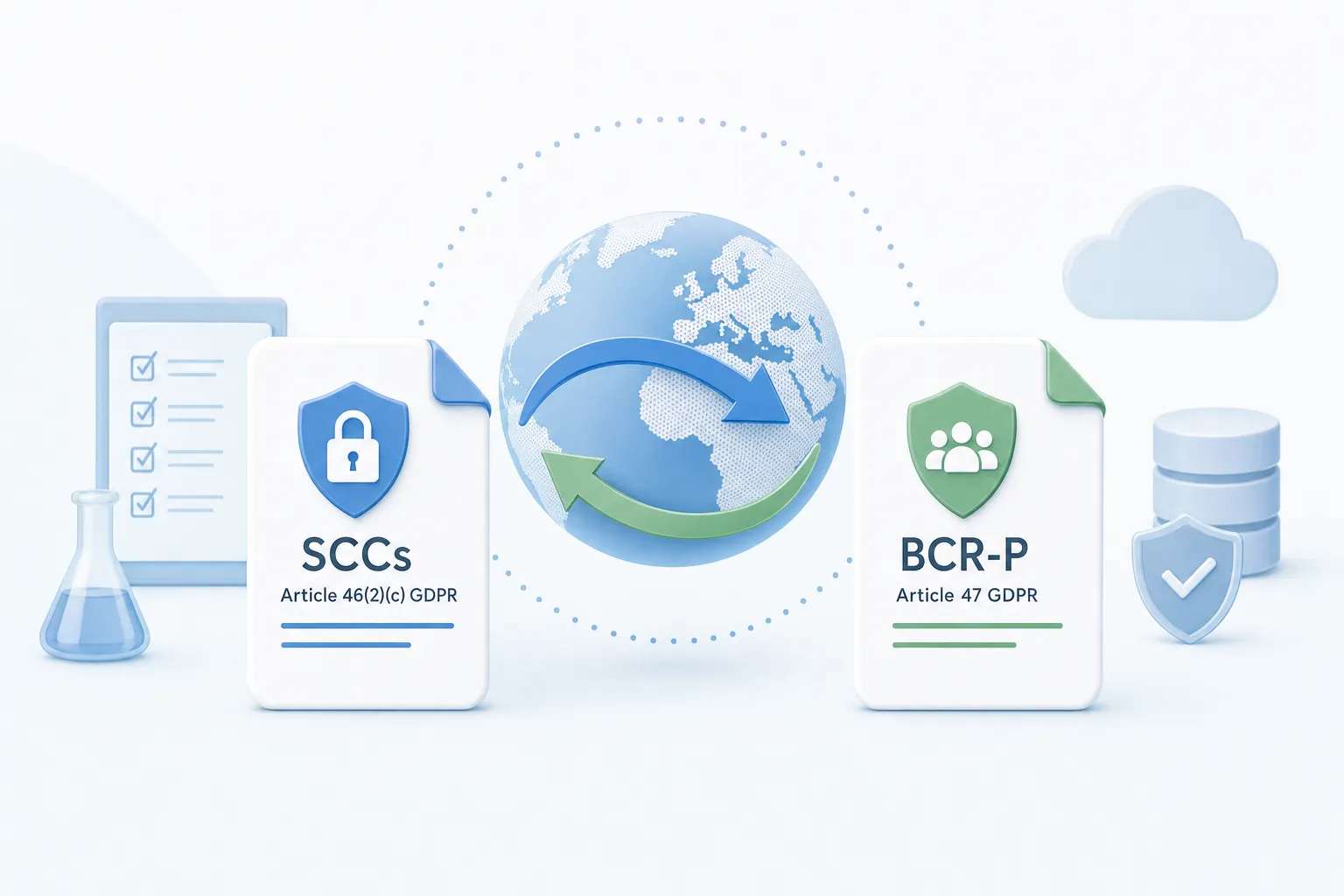
Standard contractual clauses (SCCs) in clinical trials: when do processor BCRs apply instead?
SCCs in clinical trials are the Article 46 GDPR transfer tool. See how they differ from processor BCRs and what EDPB Recommendations 1/2026 change.
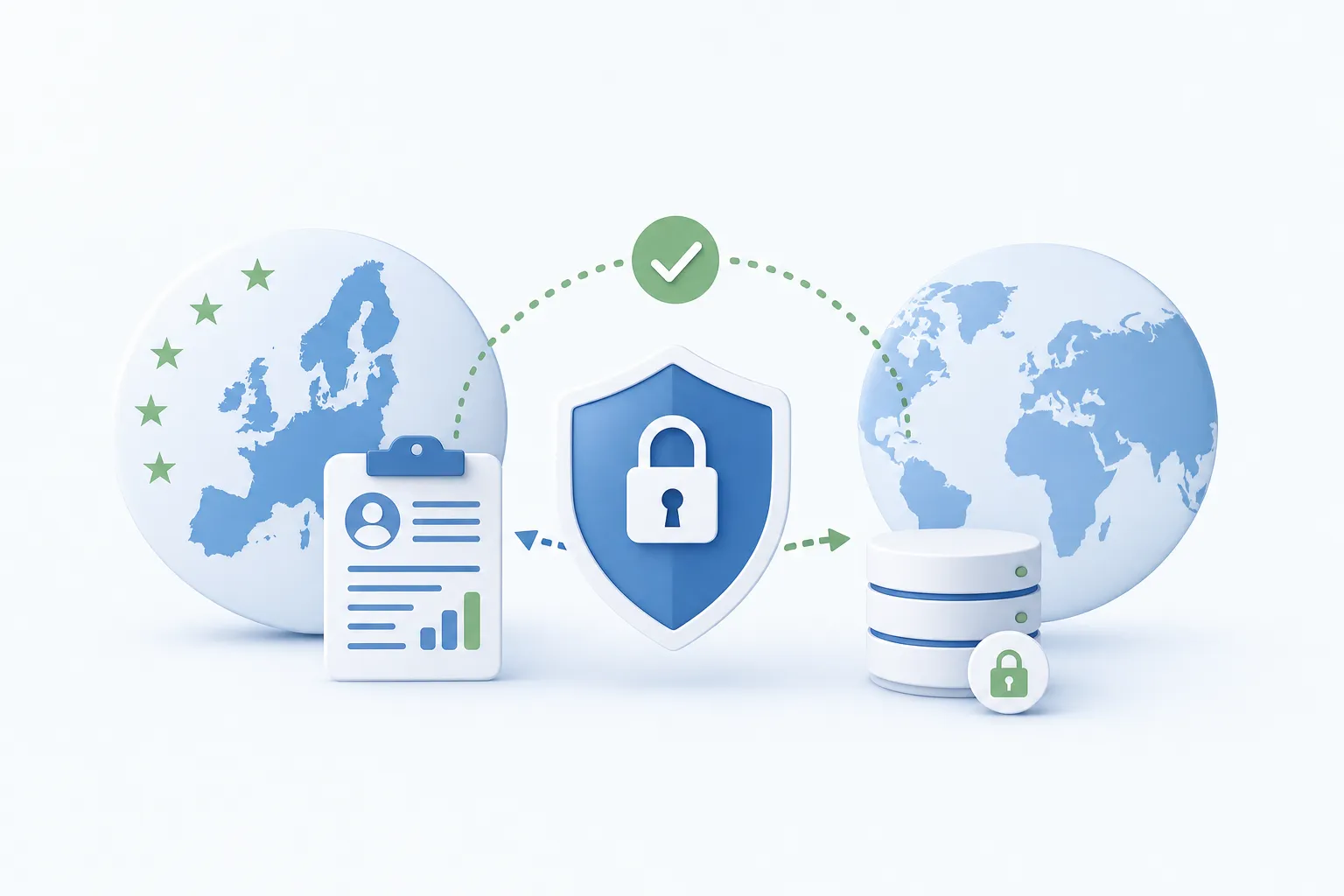
Cross-border data transfers in clinical trials: the DPO's role in choosing mechanisms and monitoring compliance
How the DPO advises on and monitors cross-border data transfers in clinical trials, from SCCs to transfer impact assessments across EEA, UK and Swiss law.
Weekly Privacy and Life Sciences Digest: Ransomware Surge, Biometric Guidance and AI Governance Developments (10 November 2026)
This week's digest covers the Vortex ransomware group targeting healthcare, AEPD biometric guidance, Saudi PDPL amendments, ICO special category updates and AI funding rounds.
