
Summary
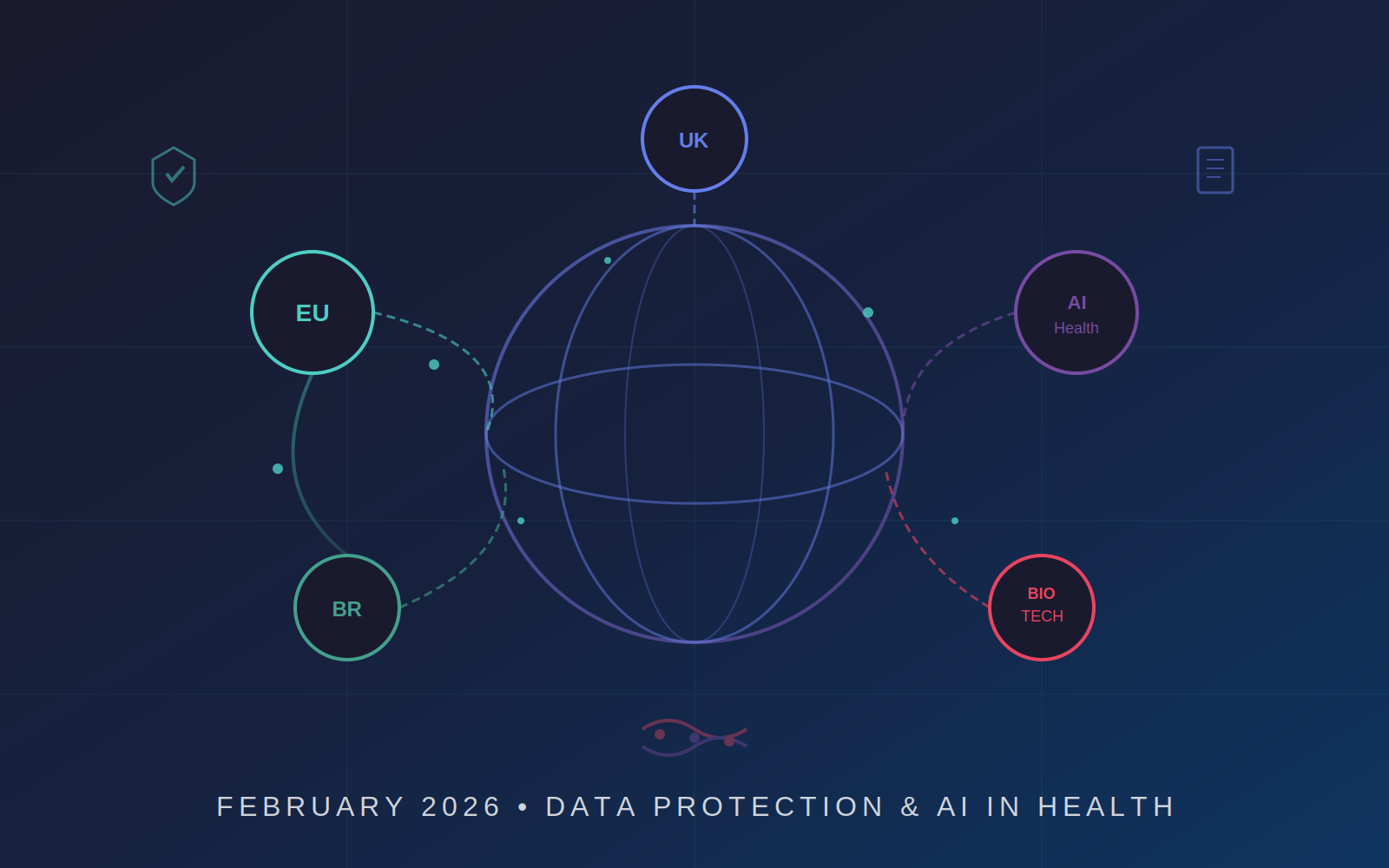
This month's edition covers major developments in international data transfers, including the landmark EU-Brazil bilateral adequacy agreement and the ICO's updated guidance introducing a new "3-step test" for restricted transfers. In AI and life sciences, we examine the EMA-FDA joint principles for AI in medicine development, alongside growing concerns around clinical AI safety and the 95% failure rate of pharma AI pilots due to data management challenges. We also report on the European Commission's proposed simplification of medical device certification and the continued shift of AI biotech companies from platform building toward clinical-stage drug development.
Regulations & Guidelines

European Union and Brazil’s Bilateral Data Adequacy Agreement
The European Union and Brazil have established a bilateral data adequacy agreement, recognizing that Brazil's data protection framework is equivalent to the GDPR. This agreement enables free and secure data flows between the two regions, eliminating the need for additional transfer tools and providing greater legal certainty for businesses and researchers, covering approximately 670 million people.

ICO’s Updated Guidance on International Transfers Published
On January 15, 2026, the ICO published updated guidance on international transfers, introducing a "3-step test" for organizations to determine restricted transfers and clarifying roles and responsibilities. The guidance is particularly relevant for international transfers from the UK between investigational sites and sponsors, governed by a non-changeable CTA template, with authority feedback indicating no actual transfer occurs, negating the need for updates on safeguard mechanisms like SCCs.

EMA and FDA Set Common Principles for AI in Medicine Development
EMA and FDA have established ten principles to guide the responsible use of AI in medicine development, covering all phases from clinical trials to safety monitoring. This initiative aims to enhance international collaboration and ensure patient safety while promoting innovation, with additional EU guidance to follow.

CNIL Clarifies Transparency Obligations for AI Under the GDPR
The CNIL has published guidance on informing data subjects in the context of AI and the GDPR. Transparency obligations apply to both direct and indirect data collection, with a requirement to inform individuals promptly, particularly when sensitive data is involved. Information provided must be clear and easily accessible. Any reliance on GDPR exemptions must be assessed on a case by case basis, taking into account the impact on individuals’ privacy and the effort required to provide such information.

Slingshot AI Withdraws from the UK as Regulators Question Mental Health Chatbots
Slingshot AI is withdrawing its mental health chatbot Ash from the UK due to regulatory concerns, citing an unclear regulatory pathway for wellness products. The company faces scrutiny as regulators consider the chatbot potentially classified as a medical device, raising questions about its marketing claims and clinical validation.
AI & Techbio

FDA’s Clinical AI Shift Raises the Stakes for AI Safety
Recent FDA guidance may allow generative AI tools in clinics with minimal oversight, raising patient safety concerns. Autonomous AI systems like prescription refills and symptom-checking chatbots challenge existing safety protocols. Urgent research is needed to study AI hand-offs and develop safety frameworks to prevent medical errors and ensure patient well-being.

95% of Pharma AI Pilots Fail and Data Is the Culprit
Pharmaceutical manufacturers face significant challenges with AI implementation, with 95% of pilots failing to deliver value due to data management issues. A five-layer data mesh strategy comprising edge intelligence, unified name space, common data models, federated governance, and continuous learning can enhance AI success rates by addressing critical data flaws such as siloed systems and inconsistent terminology.

The Shift in AI Biotech from Platform Building to Drug Development
AI biotech startups are shifting focus from developing AI models to creating drug molecules, with clinical-stage programs expected to triple by the end of 2026. Investors now prioritize tangible drug assets, and companies like Iambic, Generate:Biomedicines, and AbCellera are leading efforts to bring AI-designed drugs closer to human testing.

Inside Insilico’s $66M AI Drug Deal in Neuroinflammation
Insilico Medicine has partnered with Hygtia Therapeutics in a $66 million deal to co-develop an AI-generated NLRP3 inhibitor for neuroinflammatory diseases, particularly Parkinson's. Insilico will lead initial clinical trials, receiving $10 million upfront and up to $56 million in milestone payments. The drug, discovered via Insilico's AI platform, shows potential for effective blood-brain barrier penetration, reflecting increasing interest in NLRP3 inhibitors for neurodegenerative conditions.
BioTech, Healthtech and Healthcare

EMA Recommends 38 Novel Drugs in 2025 as Endocrinology Leads Innovation
In 2025, the European Medicines Agency recommended 38 novel drugs, 15 fewer than the FDA's 53 new treatments. Endocrinology was the leading therapeutic area with 29 recommendations, including new treatments for menopause and diabetes. Some US-approved products are still pending European authorization, reflecting regulatory differences, while the EMA expects ongoing innovation in weight management and diabetes treatments.
European Commission Proposes Streamlined Medical Device Certification
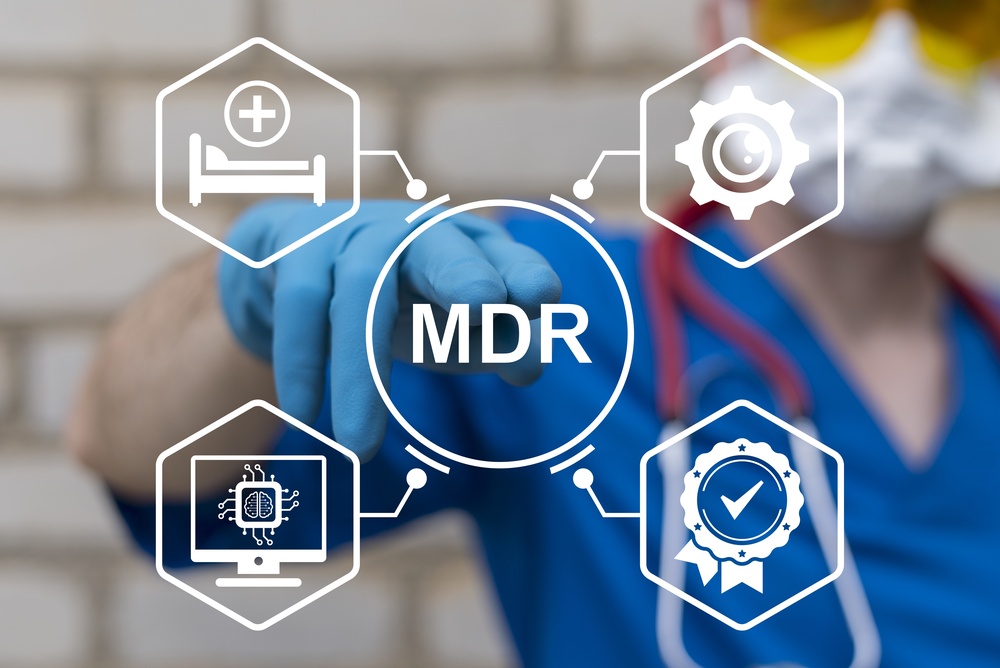
The European Commission proposed revisions to simplify EU medical device regulations, addressing issues like increased administrative burdens and certification delays. Key changes include removing the 5-year validity limit on certificates, reducing oversight for lower-risk devices, and enhancing international cooperation for conformity assessments. The proposal aims to streamline the certification process while maintaining safety standards and will undergo consideration by the European Parliament and Council before becoming law.
Podcasts
A162 Show : AI Doctors, GLp-1s and Insurance Defection
The IQVIA Podcast : AI is Changing Drug Safety


Sign up for our newsletter
We like to keep our readers up to date on complex regulatory issues, the latest industry trends and updated guidelines to help you to solve a problem or make an informed decision.


Sign up for our newsletter
We like to keep our readers up to date on complex regulatory issues, the latest industry trends and updated guidelines to help you to solve a problem or make an informed decision.


Newsletter #34
EU-Brazil data adequacy, ICO transfer guidance, EMA-FDA AI principles, and medical device reform.
Newsletter #33
Regulators advance AI rules as innovation accelerates amid governance and safety concerns
Newsletter #32
Privacy reforms advance; AI boosts drug discovery, mental health care, ADCs, healthspan.
